

Hurricane Wind and Roof Damage Claims
Most homeowners policies cover hurricane wind damage, after the deductible. The biggest disputes are usually about the roof: how much damage the insurer will admit, and whether it will pay to replace the roof or only to patch it.
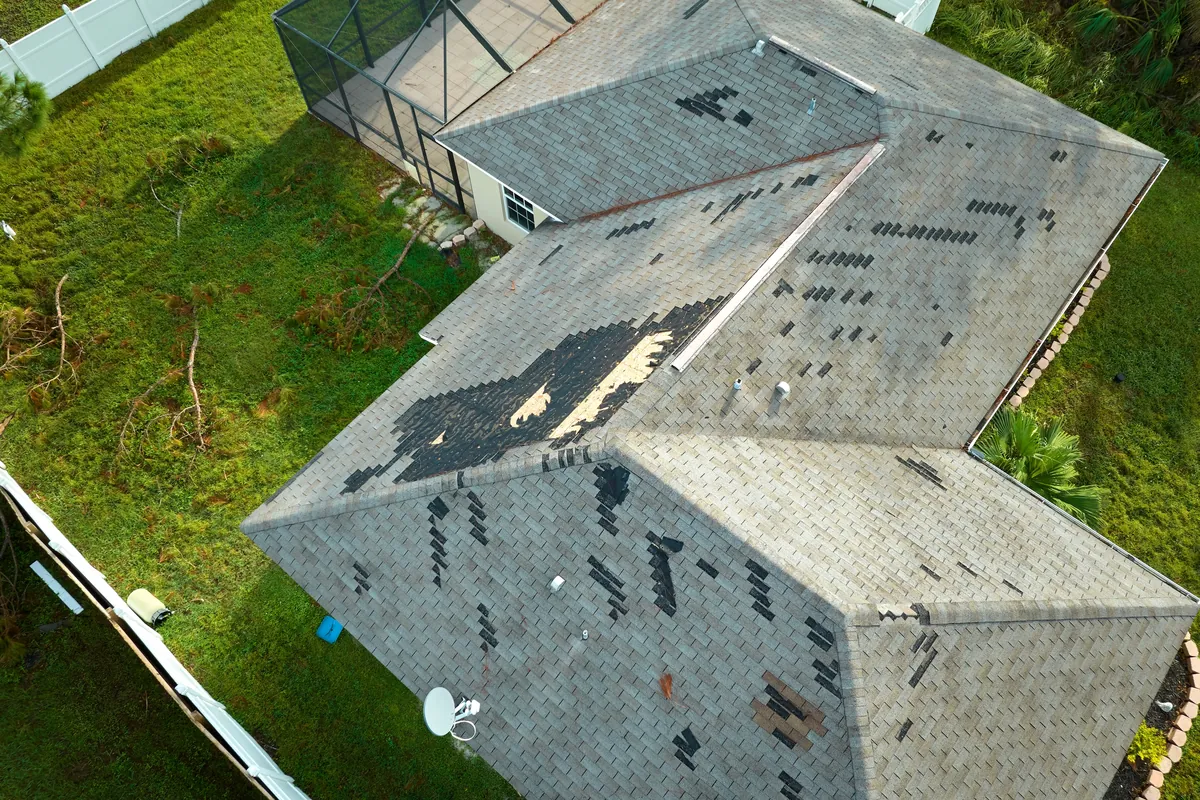
What a homeowners policy usually covers
| Coverage | What it pays for |
|---|---|
| A — Dwelling | The house itself: roof, walls, windows, built-in fixtures |
| B — Other structures | Detached garages, sheds, fences |
| C — Personal property | Furniture, clothing, electronics and other contents |
| D — Loss of use | Extra living costs while you can’t live at home |
Read your declarations page for your limits and your hurricane deductible.
For homeowners claims that aren’t caused by a storm, such as fire or frozen pipes, see Louisiana homeowners insurance claims.
Wind or flood?
Under many homeowners policies, rain damage may be covered when wind first creates an opening, such as a damaged roof or broken window, through which rain enters. Flood damage from rising or overflowing water is generally excluded and needs a flood policy. Coverage depends on your policy and the cause of each item of damage. Insurers often blame flood for damage wind caused, so photos of roof damage, broken windows and interior water lines matter.
The water line is evidence, not a dividing line. A water line shows how high floodwater rose, but it doesn’t settle what caused each item of damage. Louisiana law bars a homeowners insurer from relying on the floodwater mark without considering other evidence when it decides coverage (La. R.S. 22:1893(A)(1)). So document both: photograph the water line in every room, and photograph the damage above it that points to water from above, such as ceiling stains, wet insulation, walls soaked from the top down, and the roof openings over those areas.
It’s a question of evidence, not a rule. No rule puts everything damaged in a hurricane under one policy. The questions are what was damaged, by which force, and when: for example, whether wind opened the house to rain before the floodwater arrived, and which damage the floodwater itself caused. Photos, water lines, weather and timing records, inspection reports and itemized estimates all matter. Courts decide these disputes on the facts. In Landry v. Louisiana Citizens Property Insurance Co., 964 So. 2d 463 (La. App. 3 Cir. 2007), the court sent a disputed wind-versus-flood claim back for a factual finding on what caused the damage.
Where insurer estimates fall short
- Patching a roof that needs full replacement
- Leaving out damage the adjuster didn’t see or didn’t climb to inspect
- Pricing materials that don’t match, or no longer exist
- Leaving out steep-roof, high-roof and safety charges
- Depreciating too much, or never paying back the depreciation
The roof is the most common, and most underpaid, part of a hurricane claim. Insurers often patch what should be replaced, or price materials that won’t match.
How the hurricane deductible works
Most Louisiana policies have a separate hurricane or named-storm deductible, often a percentage, commonly 2% to 5%, of the insured value stated in your policy; some policies use a dollar amount instead (LDI). On a home insured for $300,000, a 2% deductible is $6,000, and a 5% deductible is $15,000.
- Once a year, not once a storm. On covered homeowners policies, a separate hurricane or named-storm deductible applies on a calendar-year basis. For a later storm that year, the insurer may apply the greater of the unused hurricane deductible or your deductible for other perils (La. R.S. 22:1337).
- You should have been told. For new policies effective after January 1, 2023, the insurer must give you a deductible disclosure form and ask you to sign it. It must do so again when the deductible changes.
- Check the math. Insurers sometimes apply the deductible to the wrong coverage amount, or apply it twice.
What roof disputes are really about
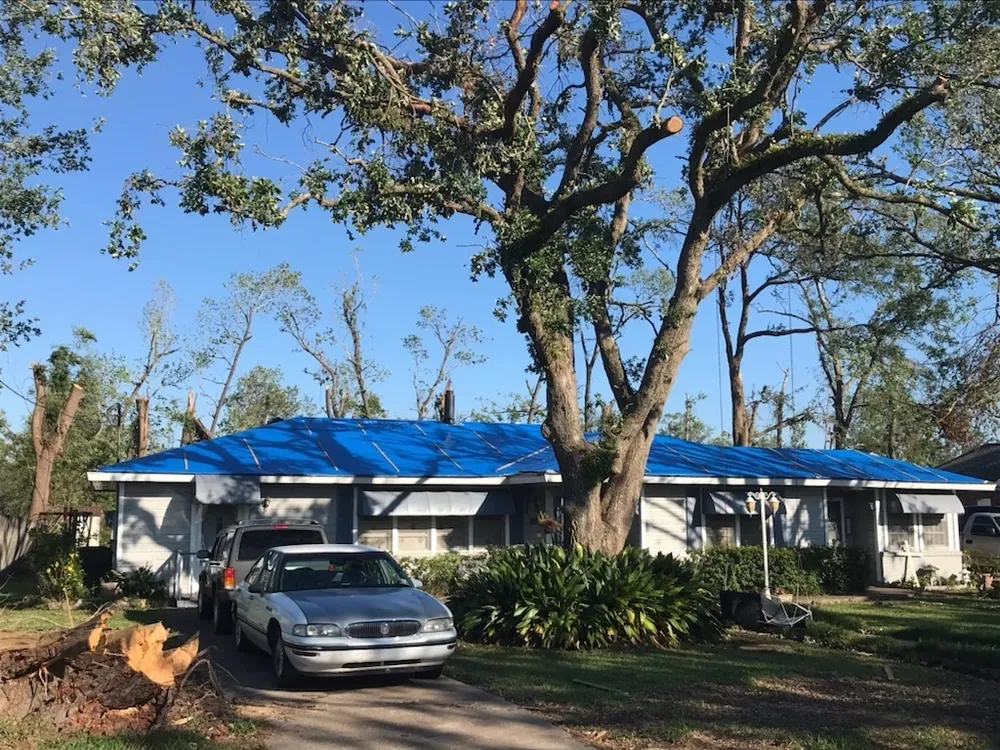
On roof claims, the fight is usually over cause and scope:
- Cause: did the storm damage the roof, or does the insurer say the condition reflects age or earlier wear?
- Scope: will a limited repair restore the roof, or does it need broader replacement?
- The estimate: does it include all the work the repair actually requires?
A low check isn’t always the insurer’s final number. It may reflect your deductible or depreciation the insurer is holding back. When an insurer applies depreciation, Louisiana law requires it to explain in writing how it calculated it, and you can ask for a copy of the field adjuster’s report (La. R.S. 22:1892). If you and the insurer agree the loss is covered but disagree on the amount, appraisal may be an option, though the policy’s terms, limits and deductible still apply.
Patch or replace?
One of the most common roof disputes: the insurer offers to pay for a patch, a few shingles or tiles, when the roof really needs to be replaced. A patch estimate may not be enough when the evidence shows it won’t restore the storm-damaged roof, for example when:
- The new shingles or tiles can’t be matched in color, size or style
- The material is discontinued
- The roof is older and brittle, so removing damaged pieces breaks the ones around them
- Damage is spread across several slopes of the roof
- Local building code requires more than a patch
Replacement isn’t automatic; it depends on the evidence. If the insurer approves only a patch, document the damage, the repair method the insurer proposes, and why your roofer says replacement is necessary, with photos showing the matching problem or brittle material. Send it to the insurer in writing, and ask the insurer to explain in writing how its repair would restore the roof. If more damage turns up or repair costs rise later, you can submit a supplemental claim (see La. R.S. 22:1892.2(D)(3) for catastrophe claims).
When the material is no longer made
If your material is discontinued, ask the insurer in writing where its specified material can be bought. Your policy’s promise of “like kind and quality” still applies.
Costs insurers leave out
- Steep-roof and high-roof charges
- Drip edge, underlayment and flashing
- Safety equipment and debris removal
- Code upgrades
What to do
- Report the claim right away, in writing.
- Photograph everything before cleanup and keep damaged materials if you can.
- Make temporary repairs to prevent more damage, and keep receipts.
- Get your own contractor’s estimate before accepting the insurer’s.
- Call me before you sign a release or accept a final payment.
The first step on any disputed claim
Put the policy, the denial or payment letter, the adjuster’s report, your photos and the competing estimates side by side. That shows whether the real disagreement is about cause, the scope of repairs, pricing, depreciation or the deductible, and that decides what to do next.
Roof claim underpaid? 504-834-4000. Back to Louisiana Hurricane Insurance Claims