

Flood Insurance Claims After a Hurricane
Homeowners policies exclude flood. If rising water or storm surge entered your home, you need a flood policy, usually through the National Flood Insurance Program (NFIP). NFIP claims follow federal rules that are stricter than a homeowners claim.
Flooding isn’t always caused by a hurricane. For flood claims from heavy rain or rising rivers, see Louisiana flood insurance claims.
NFIP deadlines you cannot miss
| Step | Deadline |
|---|---|
| Signed, sworn proof of loss | Generally within 60 days after the flood loss, unless the deadline is validly extended or the insurer accepts a signed adjuster’s report instead (SFIP Dwelling Form, art. VII.G.4) |
| Lawsuit after a denial | Generally within one year of written denial of all or part of the claim, in the U.S. district court where the property is located (SFIP art. VII.O; 42 U.S.C. 4072) |
Don’t assume the adjuster’s report will serve as your proof of loss. If the insurer’s number is too low, file your own signed, sworn proof of loss for the full amount before the deadline.
What NFIP covers
- Building coverage: for a single-family home in a regular-program community, generally up to $250,000. Your purchased limit may be lower.
- Contents coverage: generally up to $100,000, bought separately. Covered contents losses are settled at actual cash value.
- Increased Cost of Compliance: if you have building coverage and meet the policy’s requirements, up to $30,000 toward bringing a substantially damaged home up to code, subject to the overall building limit (FEMA ICC fact sheet)
Source: 44 C.F.R. § 61.6; SFIP Dwelling Form, arts. III.D and VII.R.
Basements and below-elevation areas have limited coverage.
Private flood policies
Private flood policies follow their own terms and Louisiana law, not the federal NFIP rules. Read their deadlines carefully.
When wind and flood both hit
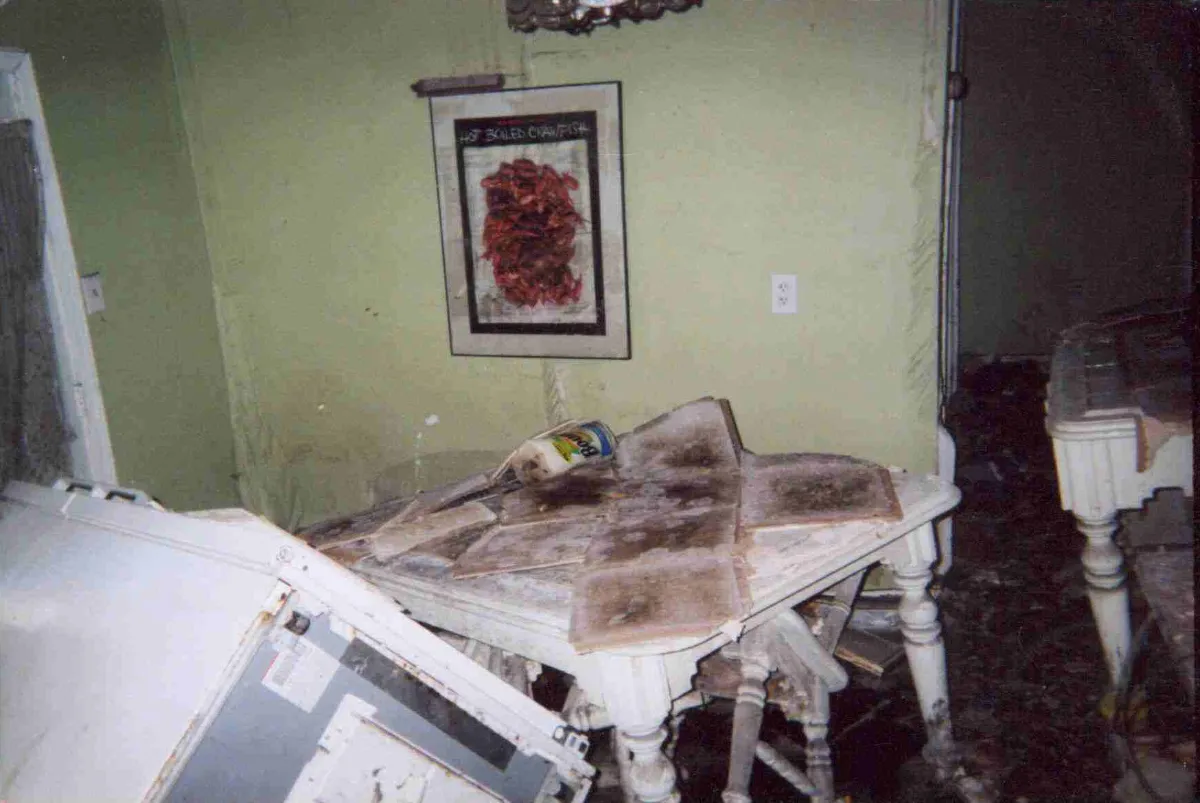
Most hurricane losses involve both wind and water, and the two insurers may each blame the other. Separate the damage early.
The water line is evidence, not a dividing line. A water line shows how high floodwater rose, but it doesn’t settle what caused each item of damage. Louisiana law bars a homeowners insurer from relying on the floodwater mark without considering other evidence when it decides coverage (La. R.S. 22:1893(A)(1)). So document both: photograph the water line in every room, and photograph the damage above it that points to water from above, such as ceiling stains, wet insulation, walls soaked from the top down, and the roof openings over those areas.
It’s a question of evidence, not a rule. No rule puts everything damaged in a hurricane under one policy. The questions are what was damaged, by which force, and when: for example, whether wind opened the house to rain before the floodwater arrived, and which damage the floodwater itself caused. Photos, water lines, weather and timing records, inspection reports and itemized estimates all matter. Courts decide these disputes on the facts. In Landry v. Louisiana Citizens Property Insurance Co., 964 So. 2d 463 (La. App. 3 Cir. 2007), the court sent a disputed wind-versus-flood claim back for a factual finding on what caused the damage.
How these disputes get resolved
- Line by line. Comparing the insurer’s estimate item by item with your documented repair scope often narrows the dispute.
- Appraisal for amount only. If the only disagreement is the amount of a covered loss, appraisal may settle it. A dispute over coverage or cause may need a coverage decision or a lawsuit instead.
- Check the flood policy separately. An NFIP flood policy has federal terms of its own (44 C.F.R. § 61.13), separate from your homeowners policy.
The first step on any disputed claim
Put the policy, the denial or payment letter, the adjuster’s report, your photos and the competing estimates side by side. That shows whether the real disagreement is about cause, the scope of repairs, pricing, depreciation or the deductible, and that decides what to do next.
Flood claim denied or underpaid? 504-834-4000. Back to Louisiana Hurricane Insurance Claims