

Louisiana Longshore Attorneys For Longshore & Harbor Workers Compensation Act Claim
The Act also offers benefits to dependents if the injury causes the employee’s death. These benefits are paid by an insurance company or by an employer who is authorized by the U.S. Department of Labor’s Office of Workers’ Compensation Programs to be self-insured. The term “injury” includes occupational disease arising out of employment.
If you are searching for an experienced Louisiana Longshore Harbor Death Benefits Workers Compensation lawyer near you, contact Charles Lavis at (504) 834-4000 for a free consultation.
How Do I Know If I am a Longshore Harbor Worker?
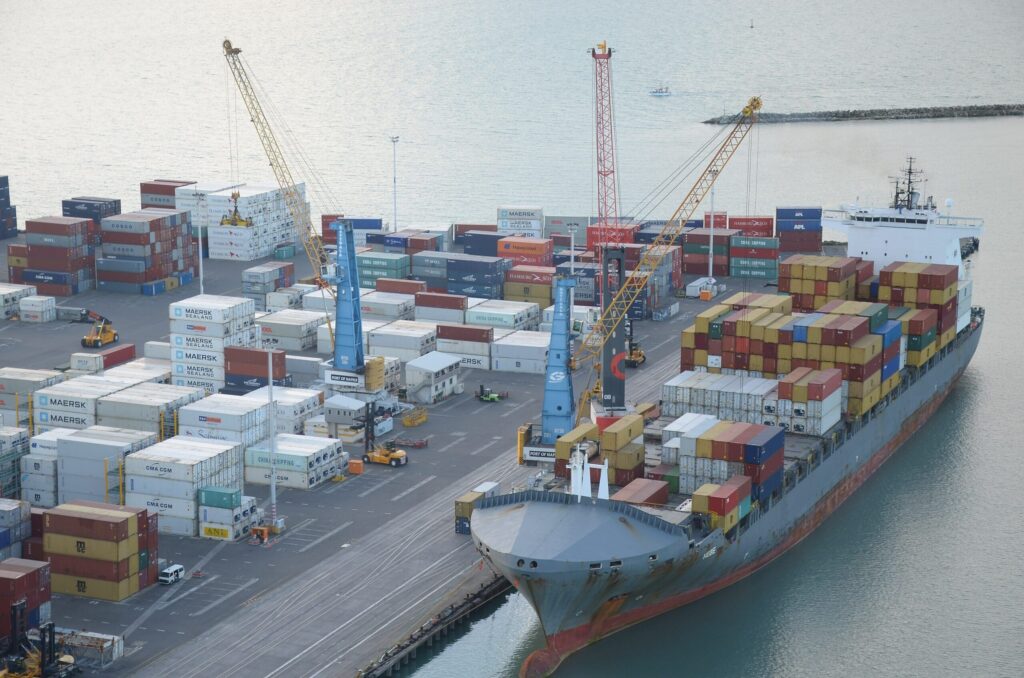
EXCLUDED WORKERS – The LHWCA claims in Louisiana exclude some workers who otherwise may be engaged in maritime employment. The exclusions fall into three distinct groups, and they do not all operate the same way.
On This Page:
Toggle1. Excluded only if the worker is covered by a state workers’ compensation law. These are the categories in 33 U.S.C. § 902(3)(A)–(F). Where state compensation does not cover the worker, the exclusion does not apply:
- Individuals employed exclusively to perform office clerical, secretarial, security, or data processing work;
- Individuals employed by a club, camp, recreational operation, restaurant, museum, or retail outlet;
- Individuals employed by a marina who are not engaged in construction, replacement, or expansion of that marina, except for routine maintenance;
- Individuals who (A) are employed by suppliers, transporters, or vendors, (B) are temporarily doing business on the premises of a maritime employer, and (C) are not engaged in work normally performed by employees of that employer under this Act;
- Aquaculture workers;
- Individuals employed to build any recreational vessel under sixty-five feet in length, or individuals employed to repair any recreational vessel, or to dismantle any part of a recreational vessel in connection with the repair of such vessel. 33 U.S.C. § 902(3)(F). The sixty-five-foot limit attaches to building a recreational vessel. The repair and dismantling language is not limited by vessel length.
2. Excluded whether or not state compensation applies. The state-coverage condition above does not reach these:
- A master or member of a crew of any vessel. 33 U.S.C. § 902(3)(G);
- Any person engaged by a master to load, unload, or repair any small vessel under eighteen tons net. 33 U.S.C. § 902(3)(H).
3. Excluded under separate provisions.
- Officers and employees of the United States, or of any state, territory, or foreign government, are excluded by 33 U.S.C. § 903(b) rather than by the definition of “employee”;
- Work at a facility the Secretary of Labor has certified as engaged exclusively in building, repairing, or dismantling small vessels — commercial barges under 900 lightship displacement tons, and commercial tugboats, towboats, crew boats, supply boats, fishing vessels and other work vessels under 1,600 gross tons. 33 U.S.C. § 903(d). This exclusion is narrower than it first appears. It does not apply if the injury occurs on the navigable waters of the United States or on an adjoining pier, wharf, dock, launching facility or hauling, lifting or drydocking facility; if the facility receives federal maritime subsidies; or if the worker is not subject to coverage under a state workers’ compensation law.
Whether any exclusion applies turns on the particular work performed and where it was performed. For more information, contact our Longshore attorney to help you get your life back on track.
Longshore Worker Injury Lawyer Near You
Working in maritime industries offshore exposes individuals to unique risks, and accidents can sometimes have tragic consequences. Offshore work is not a single coverage class. Some offshore workers may qualify under the LHWCA or under a law extending its benefits; a master or member of a vessel’s crew is excluded from the Act and may instead have remedies under other maritime law. 33 U.S.C. § 902(3)(G). When these unfortunate events occur, understanding the compensation available to the families of deceased workers is crucial. The Longshore and Harbor Workers Compensation Act (LHWCA) provides a framework for death benefits, offering financial support and security to the dependents of workers who lose their lives in the course of employment. A survivor’s claim for death benefits is made on Form LS-262, the Claim for Death Benefits. Form LS-203 is the injured employee’s own claim for compensation and is not the form used for a death claim. Contact our Louisiana Longshore lawyer near you today.
Understanding Longshore Workers’ Compensation Settlement and Death Benefits
Trying to access these benefits after your loved one has lost their life while on the job as a longshore worker can be difficult at times. It is best to contact a longshore benefits lawyer near you who has experience working with the Harbor Workers Compensation Act and understands the intricacies of these laws. At the Lavis Law Firm out of New Orleans, LA Lavis Law Firm has years of experience helping family members work with the LHWCA to pursue the benefits available to eligible family members under the Act after they have lost their family member in a tragic accident. Contact our New Orleans longshore worker injury law firm today to set up your free case consultation.

Shipyard and Boat Building Injury Lawyer for Franklin, New Iberia, Morgan City and Loreauville
The shipyards and boat-building yards in Franklin, New Iberia, Morgan City and Loreauville employ welders, fitters, pipefitters, painters, blasters, electricians and laborers who build and repair vessels for the Gulf. If you are hurt at one of these yards, your claim may fall under the Longshore and Harbor Workers’ Compensation Act instead of Louisiana state workers’ compensation. That difference matters, because Longshore weekly benefits are often higher than state benefits.
The LHWCA generally covers shipbuilding and ship-repair workers injured on navigable waters or in adjoining areas such as shipyards, piers, dry docks and launching ways (33 U.S.C. § 903(a)). Some workers are excluded, including people employed to build recreational vessels under 65 feet long (33 U.S.C. § 902(3)(F)). Whether you are covered depends on the work you do and where you were hurt, so have a lawyer review your situation before you accept state benefits or sign anything.
Common injuries at shipyards and boat-building yards include:
- Falls from scaffolding, staging and ladders
- Crush injuries from steel plates, cranes and forklifts
- Burns and eye injuries from welding and cutting
- Back, shoulder and knee injuries from heavy lifting
- Hearing loss from grinding and hammering
- Lung problems from welding fumes, paint and blasting dust
Under the Longshore Act, an injured worker can generally choose his or her own treating doctor and may be entitled to weekly compensation and medical care. If your employer or its insurer has denied your Longshore claim, cut off your benefits, or is steering you toward state workers’ comp, call Lavis Law Firm at (504) 834-4000 for a free case review. We help injured shipyard and boat-building workers in St. Mary Parish and Iberia Parish, including Franklin, Morgan City, New Iberia and Loreauville.
What Are LHWCA Injury Benefits?
Our Longshore Worker Injury Law Firm in Loiusiana
Lavis Law Firm – Louisiana Longhsore Worker Injury Lawyer
643 Magazine St #301D
New Orleans, LA 70130
504-834-4000
Who Can Access Longshore and Harbor Workers Death Benefits?
The Longshore and Harbor Workers Compensation Act is a federal law that provides benefits to workers employed in maritime occupations, excluding seamen. This coverage extends to many different types of individuals who are employed in various occupations related to maritime activities. Some of these include:
Longshoremen – Longshoremen are workers who load and unload cargo onto and from ships. They operate on docks and terminal facilities, ensuring the efficient movement of goods between ships and land transportation.
Stevedores – Stevedores are responsible for the stowing and securing of cargo on different types of ships. It is their job to maximize the use of cargo space on the boat while ensuring the safety of the goods being transported.
Ship Repairers – Ships can often be in need of repairs. A ship repairer is any worker who is involved in the repair and maintenance of a sea-going vessel. This can include welders, electricians, mechanics, and other skilled tradespeople.
Shipbuilders – Individuals engaged in the construction of ships, including welders, shipwrights, and other construction workers, are also covered under the LHWCA.
Marine Terminal Employees – Employees who work out of marine terminals, such as those responsible for cargo handling and equipment operation, are frequently covered. Coverage is not automatic for everyone working at a terminal: it depends on the particular duties and the location where the work was performed, and maintenance work alone does not establish maritime employment. Individuals employed exclusively to perform office clerical, secretarial, security, or data processing work are expressly excluded where they are covered by a state workers’ compensation law. 33 U.S.C. §§ 902(3), 903(a).
Harbor Workers – Workers involved in harbor-related activities such as maintenance and logistics within port areas may qualify, depending on their specific duties and where the work occurred. Individuals employed exclusively in security work are excluded where the statutory state-coverage condition is met. 33 U.S.C. § 902(3)(A).
Crane Operators – Cranes are an integral part of moving cargo on and off of ships. Crane operators are responsible for lifting and moving this heavy cargo in a safe and efficient manner.
Forklift Operators – Similarly to crane operators, forklift drivers handle cargo and other equipment on docks and in maritime terminals. As such they are also included in the definition of Longshore and Harbor Workers.
Dock Workers – General dock workers involved in a variety of tasks related to maritime activities, including equipment operation, cargo handling, and maintenance, fall under the LHWCA coverage.
Cargo Checkers – Cargo checkers are responsible for inspecting and documenting the condition of cargo as it is loaded and unloaded from ships, ensuring accuracy and compliance with shipping manifests.
Ship Clerks – Ship clerks handle administrative tasks related to cargo documentation, such as maintaining records, preparing shipping manifests, and coordinating communications between ship and shore personnel.
It’s important to note that while these examples provide a general overview, the specific job duties and responsibilities of individuals within the maritime industry can vary. Determining eligibility for coverage under the LHWCA involves assessing the nature of the work performed and the relationship to maritime activities. These claims can get complicated which is why we recommend contacting an experienced Louisiana Longshore & Harbor death benefits attorney near you.
Death Benefits Provided By The LHWCA
To qualify for longshore death benefits through the LHWCA, it must be established that the worker’s death resulted from a work-related injury or illness. This can include accidents on the docks, vessel collisions, or exposure to hazardous substances. Once that has been established then these death benefits will be paid out to the worker’s loved ones who were dependent on them financially.
Dependents who are impacted by the death of their loved one who works as a longshore or harbor worker are entitled to receive compensation in the manner of death benefits. Dependents may include spouses, children, and other family members who were financially dependent on the deceased worker. The LHWCA stipulates that death benefits are to be paid in the form of weekly compensation. The amount of the death benefit is generally a percentage of the deceased worker’s average weekly wage, subject to a maximum limit as defined by law.
Longshore death benefits are typically payable for a specified period, determined by factors such as the number and type of dependents. For example, a surviving spouse may receive benefits until remarriage, and on remarriage receives two years’ compensation in one sum (33 U.S.C. § 909(b)), while children may receive compensation until reaching a certain age. These claims can get complicated. Contact an experienced Louisiana Longshore lawyer near you.

Breakdown of Longshore Worker Death Benefits
If the longshore worker suffers a permanent and total disability they are then entitled to lifetime benefits with an annual cost of living adjustment. If they lose their lives due to the accident then their family member(s) will be paid a death benefit. The death benefits for those impacted by the loss of their loved one due to a harbor accident are different depending on their living situation. Child and spousal benefits are paid out according to the worker’s specific circumstances.
Longshore Worker Death Benefits:
- Widow/Widower – 50% of AWW with annual cost of living adjustment
- Widow and One Child – 66 & 2/3% of the AWW with annual cost of living adjustment
- Widow and Two Children – Same as above
- Surviving Parents – Based on proof of dependency at the time of injury (33 U.S.C. § 909(f))
- No Dependents – $5,000 payable to the special fund
- Adult Children – Based on proof of dependency at the time of injury (33 U.S.C. § 909(f))
- Funeral Expenses – reasonable funeral expenses reimbursed up to $3,000 (33 U.S.C. § 909(a))
Bars to Benefits: if alcohol and drug intoxication are deemed to be the sole cause of the injury, regardless of whether the employer has a written drug policy, then the benefit could be negated. 33 U.S.C. § 903(c). The burden is not on the worker: in the absence of substantial evidence to the contrary, the law presumes the injury was not occasioned solely by intoxication. 33 U.S.C. § 920(c).
Lavis Law Firm can help you get through this difficult time. Contact an experienced Louisiana Longshore & Harbor death benefits lawyer today.
Maximum and Minimum Payments
Maximum. Compensation for disability or death may not exceed 200% of the applicable national average weekly wage. 33 U.S.C. § 906(b)(1). In death cases, total weekly benefits may not exceed the lesser of the deceased worker’s average weekly wage or that maximum. 33 U.S.C. § 909(e)(1).
Minimum. Compensation for total disability may not be less than 50% of the applicable national average weekly wage, unless the worker’s own average weekly wage is lower, in which case he or she receives that average weekly wage. 33 U.S.C. § 906(b)(2). The minimum does not apply to Defense Base Act claims. 42 U.S.C. § 1652(a).
Both figures are reset by the Department of Labor each October 1. 33 U.S.C. § 906(b)(3).
Waiting Period and Beginning of Compensation
KEY STEPS- What To Do If You Are Injured and Covered Under Longshore and Harbor Workers’ Compensation Act?
- NOTIFY your employer immediately. If you need medical treatment, ask your employer for a Form LS-1, which authorizes treatment by a doctor of your choice.
- OBTAIN medical treatment as soon as possible.
- GIVE written notice of your injury within 30 days both to your employer and to the OWCP district director for the compensation district where the injury occurred, on Form LS-201. 33 U.S.C. § 912(a). Notice of death must also be given within 30 days. Additional time is provided for certain hearing loss and occupational disease claims. Contact your nearest OWCP district office for additional information regarding these types of claims.
- FILE a written claim for compensation within one year after the date of injury or last payment of compensation, whichever is later. A claim for survivor benefits must be filed within one year after the date of death. The time for filing claims in certain occupational disease cases has been extended to two years.
- If you are having any problems with your Longshore and Harbor Workers’ Compensation case, call me at 866-558-9151 (866-558-9151 FREE) or submit your inquiry online. Please be advised that you may be facing important legal deadlines so don’t delay. We may be able to help you with your longshore workers’ comp settlement.
Other Acts provide similar coverage to the LHWCA for certain other employees:
Statutory authority: notice of injury or death, 33 U.S.C. § 912(a); filing a claim for compensation, 33 U.S.C. § 913(a)–(b).- DEFENSE BASE ACT, applying to employment by Federal government contractors outside the continental U.S., Alaska, or Hawaii.
- OUTER CONTINENTAL SHELF LANDS ACT, applying to employees of private industry, who is not a seaman, conducting certain operations (such as the exploration or development of natural resources) on the Outer Continental Shelf of the United States.
- NON-APPROPRIATED FUND INSTRUMENTALITIES ACT, applying to civilian employees of non-appropriated fund instrumentalities (post exchanges, etc.) of the Armed Forces.
Get Help In Louisiana With Filing A Longshore Death Benefits Claim or Appealing A Denial
Dependents are required to file a Longshore & Harbor Workers Compensation claim for death benefits with the Office of Workers’ Compensation Programs (OWCP) within a specified timeframe. Timely and accurate submission of documentation is essential to ensure a smooth claims process. Given the complexity of the claims process regarding LHWCA compensation requests, seeking legal assistance from an experienced longshore death benefits attorney is highly recommended. Attorneys with expertise in maritime law can guide dependents through the necessary steps, ensuring that all required documentation is provided. And in cases where a claim is denied and dependents are trying to appeal the decision, legal representation is essential as your longshore lawyer will provide the necessary advocacy to secure the benefits you deserve.
Longshore death benefits under the Longshore and Harbor Workers Compensation Act offer a lifeline to the families of maritime workers who tragically lose their lives while contributing to vital industries. Understanding the eligibility criteria, filing procedures, and the role of legal representation is essential for dependents navigating the complex landscape of compensation following a work-related fatality.
Contact an Experienced Louisiana Longshore Attorney Near You
If you are searching for an experienced Louisiana Longshore attorney near you, call our longshore harbor death benefits claim lawyers at the Lavis Law Firm at (866) 558-9151 for a free case consultation on your longshore workers’ comp settlement case.
If you have lost a loved one who was employed as a longshore worker in Louisiana, please fill out our form. Lavis Law Firm will be able to help you determine the next steps in working with the LHWCA to ensure you get the compensation you need.
Contact Form
New Orleans Workers Compensation Lawyer Review
⭐⭐⭐⭐⭐
https://goo.gl/maps/AyvP13jRGNhoe5R46 – link to Google Review
ADDITION RESOURCES:
Claim For Death Benefits Form (LS-262)
Related Resource: Learn more about Longshoring & Marine Terminal Accidents and how injuries in these settings may be covered under the LHWCA.