

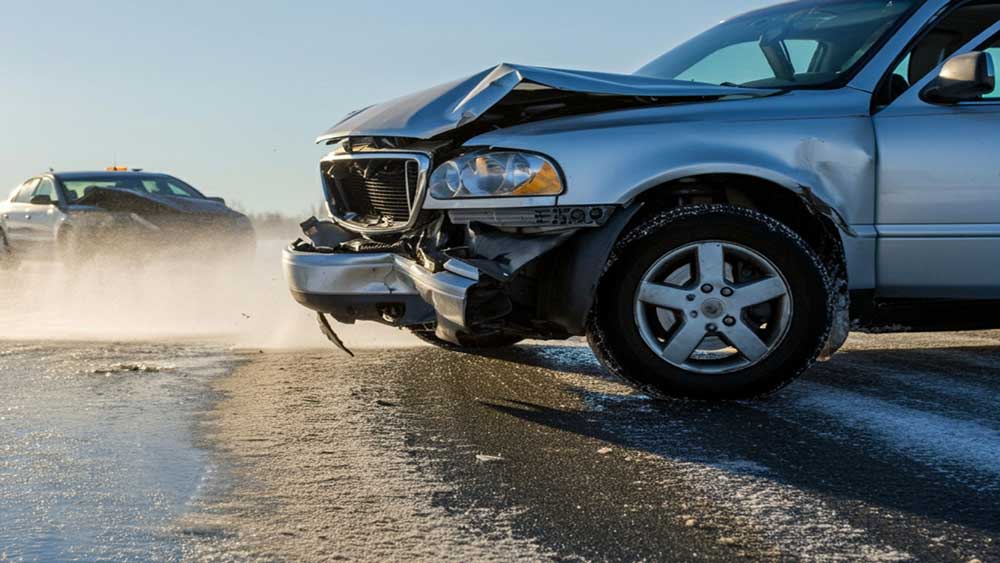
What Is Black Ice?
- When temperatures drop below freezing after rain or snow.
- In shaded areas of roads, bridges, and overpasses.
- During early morning or late-night hours when temperatures are at their lowest.
What Is Black Ice?
• Rear-end collisions.
• Multi-vehicle pileups.
• Vehicles sliding off the road.
Determining Negligence in Black Ice Accidents
Even when weather conditions are extreme, drivers have a duty to operate their vehicles safely. Negligence can play a significant role in black ice accidents if drivers:
On This Page:
Toggle- Fail to reduce speed in icy conditions.
- Ignore weather advisories or road closures.
- Follow too closely, leaving insufficient stopping distance.
- Drive without properly maintaining their vehicle, such as using worn tires.
Third parties may also share responsibility, such as government entities that fail to properly salt or sand roads to minimize ice formation.
Black Ice Injuries
Accidents on black ice often result in serious injuries, including:
- Whiplash and neck injuries.
- Broken bones and fractures.
- Spinal cord injuries.
- Traumatic brain injuries (TBI).
If you or a loved one suffered injuries in a black ice accident, you may be entitled to compensation for medical expenses, lost wages, pain, and suffering.
Steps to Take After a Black Ice Accident
- Seek Medical Attention: Prioritize your health and document injuries.
- Report the Accident: Contact local law enforcement to file an accident report.
- Gather Evidence: Take photos of the scene, road conditions, and any visible injuries.
- Contact Lavis Law: Our team can help you navigate the claims process and hold negligent parties accountable.
Helpful Resources
Why Choose Lavis Law?
This post is general information about legal developments, not legal advice. It may discuss court decisions, statutes, or regulations without describing every fact, issue, or exception that could apply, and state and federal law changes over time. No representation is made that this post is accurate, complete, or current, either now or at the time it was published. Reading it does not create an attorney-client relationship. See our full Disclaimer, and contact our office to discuss your specific situation.